You can convert lumens to watts by comparing the amount of light a bulb gives off (lumens) to the energy it uses (watts), but the numbers change based on the bulb’s type and efficiency. Many people mix up watts with brightness, but watts only show how much power a bulb uses. Lumens tell you how bright the bulb will be. Here’s a quick look at the difference:
- Lumens show brightness.
- Watts show energy use.
- Efficiency (lumens per watt) tells you how well a bulb turns energy into light.
If you focus on lumens to watts, you can pick bulbs that save money and energy. For example, check out how much you could save each month just by choosing the right bulb:
| Bulb Type | Wattage | Monthly Cost ($) | Monthly Savings ($) |
|---|---|---|---|
| Incandescent (100W) | 100 | 3.60 | N/A |
| LED (15W) | 15 | 0.54 | 3.06 |
Key Takeaways
- Lumens measure brightness, while watts measure energy use. Always check lumens first to find the right brightness for your space.
- Use a lumens to watts chart to compare different bulb types. This helps you choose energy-efficient bulbs that save money.
- Apply the lumens to watts formula to calculate bulb efficiency. Higher lumens per watt means more light for less energy.
- Explore online tools for quick conversions between lumens and watts. These calculators simplify the process of selecting the right bulb.
- Switching to LED bulbs can save you money and energy. They last longer and provide more brightness with less wattage.
1. Lumens to Watts Chart
What Is the Chart?
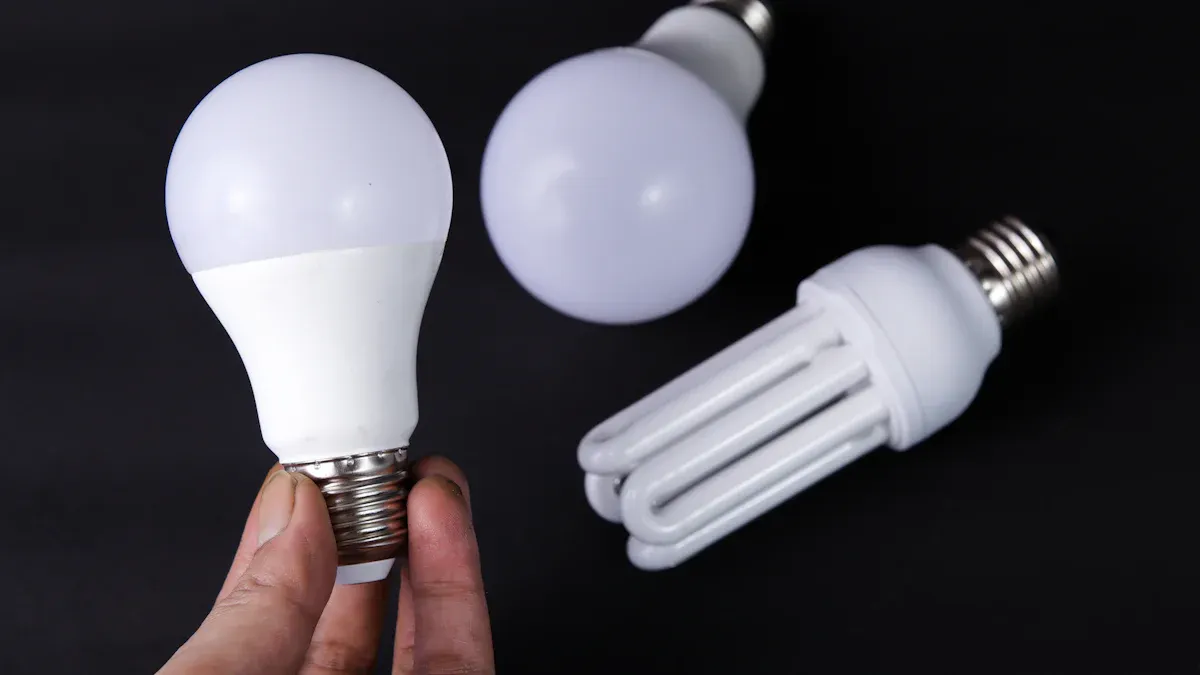
A lumens to watts chart helps you see how much energy different bulbs use to give off the same amount of light. You can use this chart to compare the brightness and energy use of LED, CFL, incandescent, and halogen bulbs. Instead of guessing which bulb is brighter or more efficient, you just look at the numbers. This makes it easy to pick the right bulb for your home.
Tip: Lumens measure brightness, while watts show how much energy a bulb uses. Always check lumens first if you want to know how bright a bulb will be.
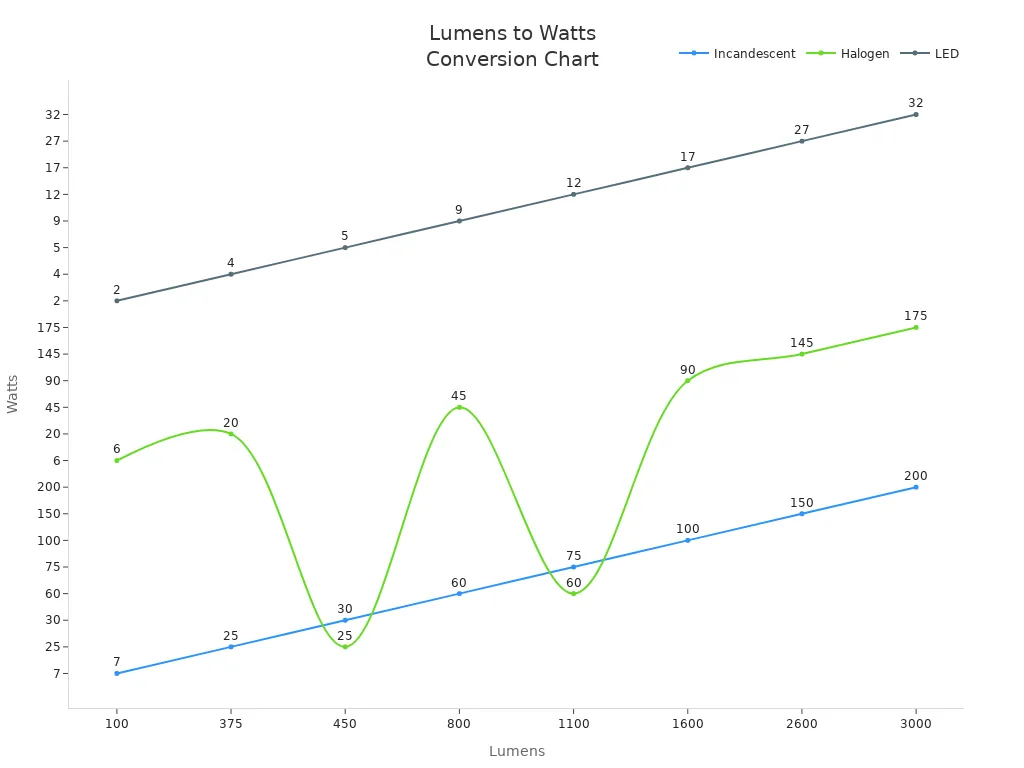
Here’s a handy chart you can use:
| Lumens | Incandescent Watts | Halogen Watts | LED Watts |
|---|---|---|---|
| 100 | 7 | 6 | 2 |
| 375 | 25 | 20 | 4 |
| 450 | 30 | 25 | 5 |
| 800 | 60 | 45 | 9 |
| 1100 | 75 | 60 | 12 |
| 1600 | 100 | 90 | 17 |
| 2600 | 150 | 145 | 27 |
| 3000 | 200 | 175 | 32 |
Reading the Chart
You can use the chart by matching the lumens you want with the type of bulb you plan to buy. For example, if you want a bulb as bright as a 60-watt incandescent, look for about 800 lumens. If you choose an LED, you only need about 9 watts to get the same brightness. This means you save energy and money every month.
- Find the lumens you need for your room.
- Check the wattage for each bulb type.
- Pick the bulb that uses the least watts for the same lumens.
Common Bulb Types
Most homes use a mix of bulb types. Here’s how they compare:
| Bulb Type | Watts Used | Average Lifespan | Total Estimated Cost over 20 Years |
|---|---|---|---|
| Incandescent | 60W | 1,200 hours | $211 |
| CFL | 14W | 8,000 hours | $54 |
| LED | 7W | 25,000 hours | $34 |
You can see that LEDs use less energy and last much longer. When you use a lumens to watts chart, you make smarter choices and save money over time.
Note: Most bulb packages now show lumens, watts, and estimated energy cost. Look for the Lighting Facts label to help you compare bulbs quickly in the store.
2. Lumens to Watts Formula
The Formula
You can figure out how efficient a bulb is by using a simple formula. Divide the number of lumens by the number of watts. This gives you the lumens per watt, which shows how much light you get for each unit of energy. Here’s the formula:
Efficiency (lumens per watt) = Lumens ÷ Watts
Let’s look at how different bulbs compare when you use this formula:
| Bulb Type | Lumens Output | Power Input (Watts) | Efficiency (Lumens per Watt) |
|---|---|---|---|
| Incandescent | 800 | 60 | 13.33 |
| LED | 800 | 8 | 100 |
| CFL | 800 | 15 | 53.33 |
You can see that LED bulbs give you much more light for less energy.
Example Calculation
Want to swap out an old bulb for something more efficient? Here’s how you do it:
- Find the wattage of your current bulb. Let’s say you have a 60-watt incandescent.
- LED bulbs are about seven times more efficient than incandescent bulbs.
- Divide 60 by 7. You get about 9 watts.
- Check the package or Lighting Facts label to make sure the LED bulb gives you around 800 lumens.
This step-by-step method helps you pick the right bulb without guessing.
Efficiency by Bulb Type
Not all bulbs use energy the same way. Here’s a quick look at how different bulbs stack up:
| Lumens (Brightness) | Incandescent Watts | CFL Watts | LED Watts |
|---|---|---|---|
| 400 – 500 | 40 | 8 – 12 | 6 – 7 |
| 650 – 850 | 60 | 13 – 18 | 7 – 10 |
| 1000 – 1400 | 75 | 18 – 22 | 12 – 13 |
| 1450 – 1700+ | 100 | 23 – 30 | 14 – 20 |
| 2700+ | 150 | 30 – 55 | 25 – 28 |
Tip: If you want to save energy, look for bulbs with higher lumens per watt. LED bulbs usually give you the best value.
When you use the lumens to watts formula, you make smarter choices and get the brightness you need without wasting energy.
3. Online Tools

Online tools make it super easy for you to convert lumens to watts without doing any math. You just enter a few numbers, and the calculator does the rest. If you want to save time or double-check your choices, these tools can help you pick the right bulb for your space.
Finding Tools
Lighting experts recommend several online calculators that you can trust. Here are two popular options:
- SunmeLighting Lumen to Watts Guide: This site gives you a simple calculator and tips for choosing LED bulbs based on brightness.
- All Purpose Trade Solutions: This guide helps you compare different bulbs and shows you how to convert lumens to watts for your home.
You can find these calculators with a quick search. Most are free and easy to use.
How to Use
You don’t need to be a math whiz to use these tools. Just follow these steps:
- Enter the number of lumens you want.
- Pick the type of bulb or light source.
- If you know the bulb’s efficiency, enter the lumens per watt.
- Hit the Calculate button to see how many watts you need.
The calculator uses this formula:
Power (W) = Luminous Flux (lm) / Luminous Efficacy (lm/W)
This helps you figure out the right bulb for your needs. You can also learn about efficacy, which shows how well a bulb turns energy into light.
Tip: Use online calculators when you want quick answers or need to compare lots of bulbs fast.
Pros and Cons
Online calculators have some great benefits, but they also have a few drawbacks. Here’s a quick look:
| Advantages of Online Lumens to Watts Calculators | Limitations |
|---|---|
| Simplifies the process of selecting energy-efficient lighting | May not account for every bulb type or special features |
| Helps you understand the relationship between watts and lumens | Results depend on the accuracy of the data you enter |
You get fast results and clear comparisons. Sometimes, you might need to check the bulb package or do a little extra research if you want the most accurate answer.
Quick Tips
Focus on Lumens
When you shop for bulbs, always check the lumens first. Lumens tell you how bright the bulb will be, while watts only show how much energy it uses. Modern bulbs like LEDs can give you more light with less energy. Here’s why looking at lumens helps you make better choices:
- Lumens measure the actual brightness you get from a bulb.
- Watts only show energy use, not how much light you see.
- LEDs can produce more lumens with fewer watts, so you get bright light and save energy.
- Focusing on lumens lets you pick bulbs that fit your needs and cut down on your energy bill.
💡 Tip: Always compare lumens when you want the right brightness for your space.
Match to Room
Every room needs a different amount of light. You want your kitchen bright for cooking, but your bedroom should feel cozy. Use the table below to find the best brightness for each room:
| Room | Recommended Lumens | Key Considerations |
|---|---|---|
| Living Room | 1,500 to 3,000 | Use multiple light sources, layered lighting, and consider dimmable bulbs. |
| Bedroom | 400 to 800 | Use bedside lamps (200-400 lumens each), warm light (2700K), avoid harsh lights. |
| Kitchen | 700 to 1,200 | Use task lighting over work areas, cooler light (4000K), and multiple sources. |
| Bathroom | 700 to 1,200 | Focus on task lighting and enough brightness for visibility. |
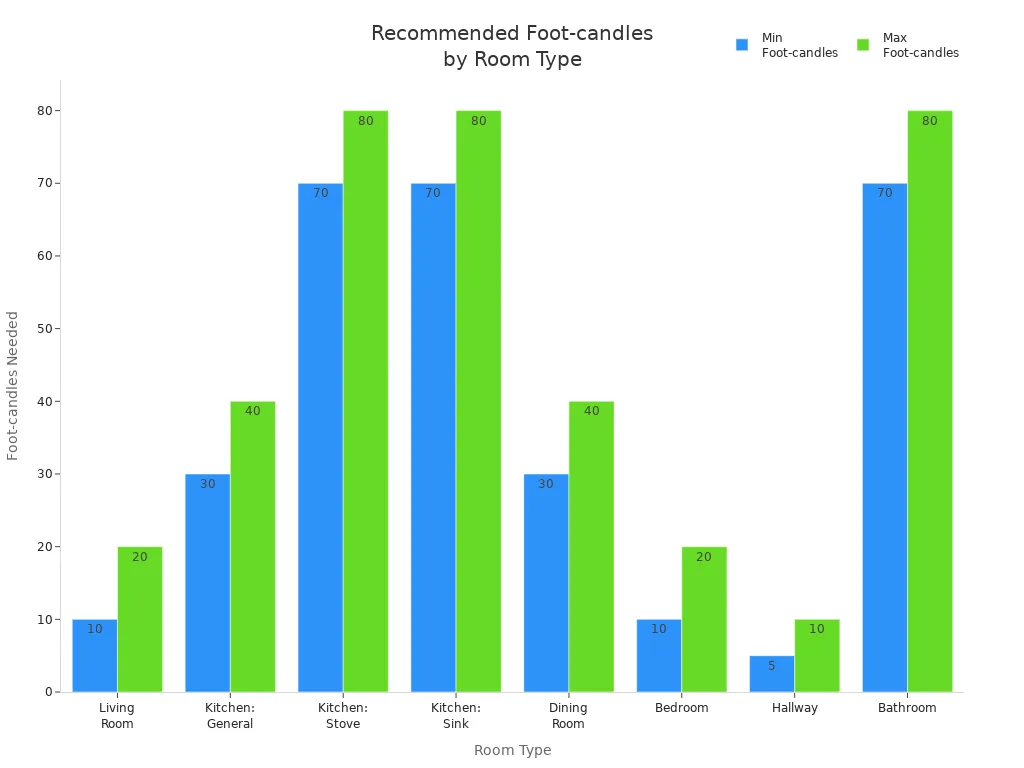
You can also check how much light each room needs by looking at foot-candles:
Save Energy
Switching to energy-efficient bulbs like LEDs can save you money and help the planet. Here’s what you can expect when you make the change:
- Replacing one 60W incandescent bulb with a 10W LED saves about $9–$10 per year.
- If you swap out 15 old bulbs for LEDs, you could save around $140 every year.
- The average home saves about $225 a year just by using LED lighting.
- Using less energy means you lower your carbon footprint and help protect the environment.
By choosing bulbs based on lumens, you get the right brightness, save money, and make a positive impact on the world.
You now have three easy ways to understand lumens to watts:
- Use a chart to compare brightness and energy use.
- Try the formula to check bulb efficiency.
- Explore online tools for quick answers.
These methods help you see that wattage measures energy, while lumens show light output. Focusing on lumens makes it simple to pick the right bulb and save money. Next time you shop, choose the method that feels easiest. You will find energy-efficient lighting much easier!
FAQ
What are lumens, and why do they matter?
Lumens measure how bright a bulb is. You want to look at lumens when you shop for lights. More lumens mean a brighter bulb. This helps you pick the right light for every room.
How do I know how many lumens I need for a room?
Check the room’s size and purpose. For example, you need more lumens in a kitchen than in a bedroom. Use this quick guide:
| Room | Lumens Needed |
|---|---|
| Bedroom | 400–800 |
| Kitchen | 700–1,200 |
| Living Room | 1,500–3,000 |
Can I use watts to pick a bulb?
You can, but it’s not the best way. Watts show energy use, not brightness. Always check lumens first. If you want to save energy, choose bulbs with high lumens and low watts.
Do LED bulbs really save money?
Yes! LED bulbs use less energy and last much longer than old bulbs. You spend less on your electric bill and buy bulbs less often. That means more money stays in your pocket.
Is it safe to use a bulb with fewer watts than my old one?
Absolutely! If the new bulb gives you the same lumens, you get the same brightness. Using fewer watts means you save energy. Just make sure the bulb fits your fixture.
Explore Our Magnetic Track Lighting Systems
Ready to find the perfect lighting solution? Discover our range of flexible, modern magnetic track lighting:
- Magnetic Track Lighting System — Versatile, modern lighting for residential and commercial spaces
- Curved Magnetic Track Lighting — Create flowing, organic designs with bendable rails
- Custom Magnetic Track Lighting — Tailored solutions for unique architectural projects
Need expert advice? Contact our team for a free lighting consultation.